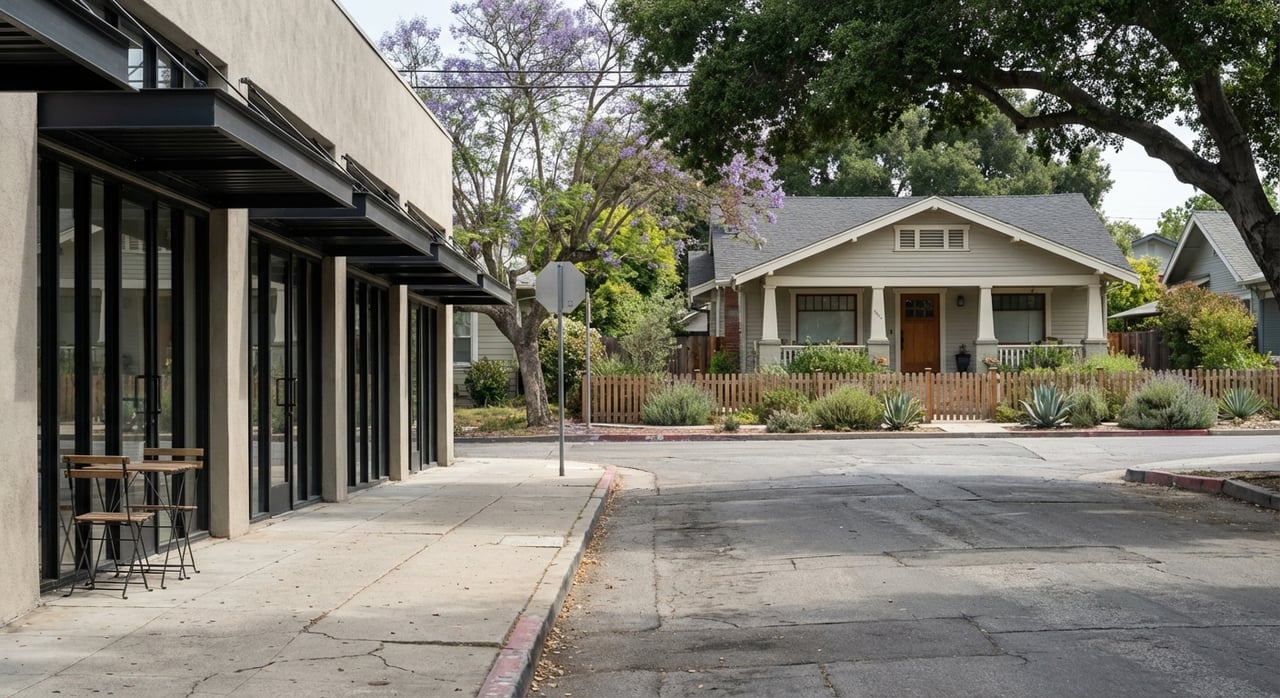
You want your first home to feel like more than just square footage. You want a neighborhood that makes life easy and enjoyable without losing connection to the city. If that sounds like you, Montrose is worth a close look. In this guide, you’ll learn what makes Montrose appealing to first-time buyers, what realistic entry points look like, and how to navigate local steps, programs, and tradeoffs. Let’s dive in.
What makes Montrose stand out
A village feel you can live in
If you picture weekend coffee runs, errands on foot, and community events right outside your door, Montrose delivers. The heart of the neighborhood is the Montrose Shopping Park on Honolulu Avenue, a compact main street lined with independent shops, cafes, and seasonal happenings. Local groups encourage residents to support small businesses, and the corridor anchors the area’s everyday rhythm. Explore the local flavor through the Montrose Shopping Park and shop-local directory.
Foothill setting with small-town vibe
Montrose sits in the Verdugo foothills within the La Crescenta–Montrose area, blending a suburban setting with a close-knit main street. The broader La Crescenta–Montrose census-designated place counted roughly 19,997 residents in the 2020 Census, reflecting a compact community with a strong sense of place. You can view quick stats on population and households at Census QuickFacts.
Why first-time buyers take notice
For many first-time buyers, Montrose hits a rare mix: neighborhood character, proximity to nature, and workable entry-level options if you are flexible on property type. The atmosphere feels approachable and local, while still offering a practical commute to job centers in Glendale, Burbank, Pasadena, and Downtown Los Angeles.
Starter homes and realistic prices
What you can buy as a first-time buyer
You will see a few patterns in Montrose’s entry market:
- Condos and townhomes near Honolulu Avenue are the most common starting point. One-bed or smaller two-bed condos have recently appeared around the high $400k to mid $500k range in sample inventory, with larger two-to-three-bed townhomes often in the $700k to $900k band.
- Smaller single-family homes and mid-century bungalows are available, sometimes with renovation potential. Entry-level detached homes commonly list at or above $1 million, with renovated or larger properties higher.
- Occasional duplex or small multiunit opportunities appear, though they move quickly and require careful financing planning.
Market snapshots from data vendors in late 2025 to early 2026 place neighborhood medians in the low-to-mid $900k range, with single-family homes frequently above $1 million. Month-to-month numbers vary by source and whether condos are included, so use ranges rather than one fixed figure when budgeting.
Costs to factor beyond the purchase price
- Property taxes: California’s Prop 13 sets a base levy of 1 percent, and local assessments typically bring effective rates to roughly 1.1 to 1.25 percent in Los Angeles County. Always confirm the parcel’s current rate with the Los Angeles County Office of the Assessor.
- HOA dues: Many Montrose condos and townhomes carry HOA fees. Examples in the area commonly range from about $200 to $500 or more per month depending on amenities and building size. Fold this into your monthly affordability.
- Homeowners insurance: Budget carefully here, especially if you are considering a hillside property. Some parcels sit in higher fire-risk zones, which can affect rates and carrier availability.
How competitive is the market
Montrose can be competitive, with well-priced homes moving within weeks in active periods. You will want a strong pre-approval, a clear walkaway number, and a game plan for tradeoffs like parking, square footage, outdoor space, or cosmetic updates.
Day-to-day living in Montrose
Walkability that changes by block
Montrose’s village center is very walkable. The closer you are to Honolulu Avenue, the more your daily errands and dining can happen on foot. Up the hills, you gain views and privacy, but you may rely more on a car day to day. Walk Score metrics for individual addresses in the area range widely, with some blocks in the 60s and others in the 80s. It helps to test your actual routes at different times of day before you write an offer.
Schools and nearby campuses
Montrose and La Crescenta are served by Glendale Unified and nearby districts. Several campuses in the area receive strong third-party ratings, which is a common factor for buyers with children. For example, Rosemont Middle School’s profile on GreatSchools reflects favorable reviews and test-score indicators. Always use neutral, third-party sources and verify current boundaries when evaluating schools.
Commute and transit options
Montrose is roughly 12 miles from Downtown Los Angeles by road from central Honolulu Avenue. Public transit is available but not high frequency. Bus routes such as Line 90 connect toward Downtown, with estimated travel times near 60 minutes depending on the time of day. You can preview route options using Moovit’s directions to Downtown. Many buyers accept car commuting as the norm and target jobs in Glendale, Burbank, or Pasadena for shorter drives.
Safety and wildfire due diligence
Glendale and the Verdugo foothill neighborhoods that include Montrose generally report violent crime rates at or below some county averages, while property crime can be comparatively higher. You can review public safety data and third-party summaries for additional context, and you should always evaluate block-by-block conditions during your search.
Wildfire risk is an important local consideration. Portions of the foothills lie in mapped fire hazard zones, and the City of Glendale actively manages vegetation and brush. Recent examples include goat grazing for brush reduction near Verdugo Park. Before you buy, confirm whether a parcel is in a Very High Fire Hazard Severity Zone, understand defensible-space responsibilities, and obtain several insurance quotes early in your lending process.
How to buy your first home in Montrose
A clear, local game plan
Use this simple roadmap to stay ahead of the curve:
- Get fully pre-approved with a local lender that works in Glendale, La Crescenta, and Pasadena. Ask for a desktop underwrite or conditional underwriting if possible.
- Define must-haves and tradeoffs. Many first-timers start with condos or townhomes near Honolulu Avenue, then monitor detached homes above $1 million for the right fit.
- Tour fast and often. Focus on blocks you like so you can act quickly when a listing appears.
- Write a competitive offer. Aim for clean terms, reasonable contingencies, and a thoughtful cover letter only if the seller’s agent invites one.
- Inspect thoroughly. Order a general home inspection plus termite/pest. Add sewer, roof, pool, or lead-paint checks for pre-1978 homes as needed.
- Track HOA documents early for condos. Budget time for resale packets, CC&Rs, rules and regulations, meeting minutes, and fee confirmations.
- Close with confidence. Keep appraisal, loan, and insurance timelines tight, especially for hillside parcels or older properties.
Inspections and disclosures you should expect
California sellers provide a Transfer Disclosure Statement and a Natural Hazard Disclosure. Buyers typically commission a general home inspection, then add specialized reports based on property age and condition. If you use certain assistance programs for pre-1978 homes, ask your lender about any additional inspection requirements. For a plain-English overview of California disclosure basics, this summary of real estate law and disclosures is helpful.
Down payment help that fits here
CalHFA programs to know
California Housing Finance Agency programs have helped many first-time buyers across the I-210 corridor. CalHFA’s MyHome program and the state’s Dream For All shared-appreciation product have been active, with Dream For All reopening for applications in early 2026. Program windows, income and eligibility rules apply, and you must work with an approved lender. Review current details on CalHFA’s homebuyer programs page.
Los Angeles County HOP options
Los Angeles County’s Home Ownership Program (HOP) offers deferred 0 percent second loans to eligible first-time buyers. HOP80 provides up to $100,000 or 20 percent of the purchase price, and HOP120 offers up to $85,000 or 20 percent, subject to income, purchase-price caps, and participating-city maps. Because of purchase-price caps, many single-family homes in Montrose may exceed limits, so condos and townhomes are the more likely fit. Check current rules and city participation on the LACDA HOP program page.
A simple lender checklist
- Ask which programs you qualify for and whether they can be stacked.
- Confirm condo project approvals early if you are buying in a building.
- Clarify how HOA dues, property taxes, and insurance are underwritten in your debt-to-income calculations.
Montrose vs. nearby options
If you are comparing neighborhoods, here are practical differences many buyers weigh:
- Eagle Rock and Highland Park: More urban-adjacent choices with a lively dining scene and frequent medians in the $1.0M to $1.3M range depending on the month and segment. These areas can trade a village main street for more dispersed retail and variable walkability by block.
- Atwater Village: Often similar or higher pricing for renovated single-family homes compared to Montrose. Inventory can be tight, and streets feel more urban.
- Montrose: Quieter foothill setting with a true main street, a strong sense of community, and realistic condo and townhome entry points. Detached homes generally start near or above $1 million.
Is Montrose right for you
Montrose is a strong match if you value a walkable village core, a suburban foothill setting, and access to respected nearby schools. You will likely start with a condo or townhome near Honolulu Avenue, then watch for the right single-family home as your budget grows. Plan for property taxes, HOA dues if applicable, and insurance that reflects hillside considerations. If that balance fits your budget and lifestyle, Montrose can be an excellent first step into homeownership.
Ready to explore listings, compare blocks, and build a smart offer strategy tailored to Montrose? Reach out to Drew Smyth to start a focused, white-glove search.
FAQs
What does a starter condo in Montrose cost in 2026
- Recent inventory shows smaller condos starting around the high $400k to mid $500k range, with larger two-to-three-bedroom townhomes often in the $700k to $900k band.
How walkable is Montrose for daily errands
- The Honolulu Avenue corridor is highly walkable, while hillside addresses rely more on driving; Walk Score for local blocks ranges roughly from the 60s to the 80s depending on location.
Are there first-time buyer programs I can use in Montrose
- Yes; buyers often explore CalHFA’s MyHome and Dream For All along with LA County’s HOP options, noting purchase-price caps that fit condos and townhomes best.
How far is Montrose from Downtown Los Angeles and major job centers
- Central Montrose sits about 12 miles from Downtown LA by road; bus service exists with estimated 60-minute trips, while many residents drive to Glendale, Burbank, or Pasadena.
What wildfire risks should I check before buying in Montrose
- Confirm whether a parcel is in a Very High Fire Hazard Severity Zone, review defensible-space rules, and obtain early insurance quotes since hillside locations can affect coverage and cost.
