
Living in Eagle Rock, Los Angeles: The Complete 2026 Guide
Living in Eagle Rock, Los Angeles: The Complete 2026 Guide
Eagle Rock is the Northeast Los Angeles neighborhood that still feels like a small town — because it once was one. It was its own city before joining Los Angeles in 1923, and it has kept that local-first character: historic homes on hilly streets, a main boulevard full of independent restaurants and shops, and a college campus at its heart.
If you're thinking about buying in Eagle Rock in 2026, this guide walks you through where it is, what daily life feels like, the homes you'll find, the honest pros and cons, and how to buy well here.
Where Is Eagle Rock?
Eagle Rock sits in Northeast Los Angeles, in a valley ringed by hills between Glendale to the northwest, Pasadena to the east, Highland Park to the south, and Glassell Park to the southwest.
The Ventura Freeway (134) runs along its northern edge, while the Glendale Freeway (2) runs along its west. The neighborhood combines busy boulevards in the flatter central area with quieter residential streets climbing the surrounding hills.
Eagle Rock takes its name from the massive boulder at its northern edge, beside the 134. Around midday, the rock casts a shadow shaped like a flying eagle — a landmark locals simply call "The Rock." It was designated Los Angeles Historic-Cultural Monument No. 10 in 1962.
Colorado Boulevard and Eagle Rock Boulevard: The Two Main Streets
Much of daily life in Eagle Rock revolves around two streets that cross near the center of the neighborhood. Each offers a different experience of the area's local character.
Colorado Boulevard
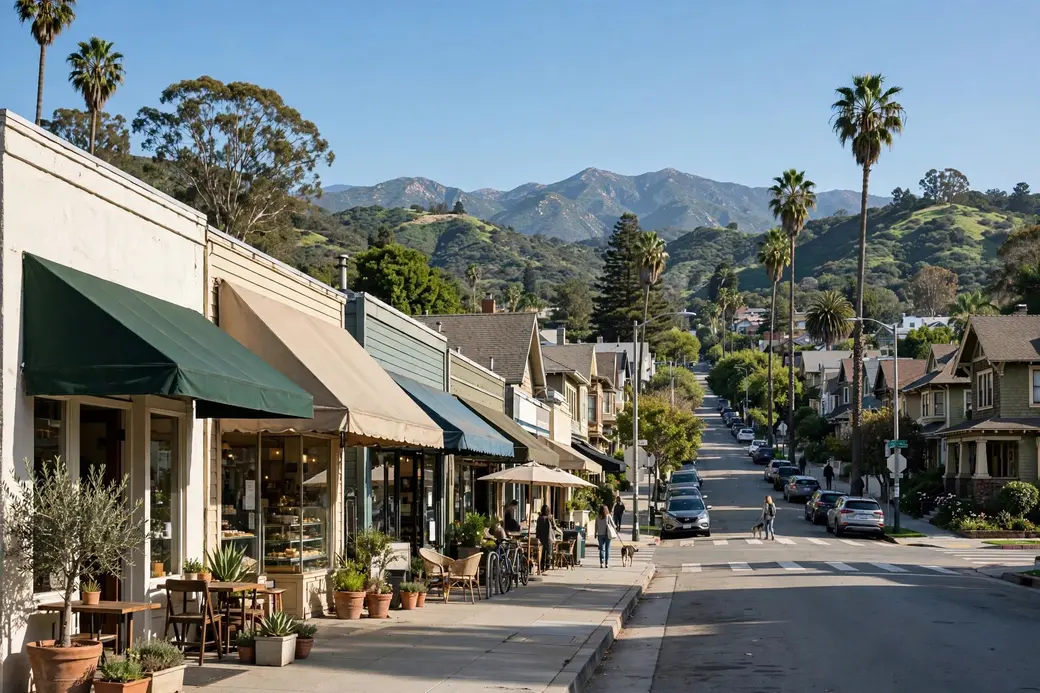
Colorado Boulevard is Eagle Rock's main street — an east-west boulevard that also runs through Pasadena and Glendale. Its Eagle Rock stretch is the neighborhood's dining and shopping center, with independent cafés, restaurants, bakeries, and vintage shops along a walkable corridor.
Long-running favorites like Casa Bianca, the family-owned pizzeria serving thin-crust pies since 1955, sit alongside newer arrivals. Near the Pasadena end, Eagle Rock Plaza provides a convenient destination for much of the area's weekly shopping.
Eagle Rock Boulevard
Eagle Rock Boulevard runs south toward Highland Park and Glassell Park, offering a more everyday neighborhood atmosphere. You'll find local restaurants, specialty food shops, gyms, and essential services mixed with older commercial buildings.
One local landmark is the historic Bucket, a 1930s hamburger stand shaped like an ice chest. Streets just off the boulevard are mostly residential, giving nearby homes a calmer feel than the busy road might suggest.
York Boulevard, along the southern edge, offers another option for dining and exploring — one reason Eagle Rock and Highland Park often feel connected in everyday life.
Occidental College: The Landmark at Eagle Rock's Heart
Occidental College shapes Eagle Rock as much as The Rock itself. Founded in 1887, "Oxy" moved to its permanent Eagle Rock campus in 1914, on a hillside site designed by architect Myron Hunt, who was also associated with the Caltech campus and the Rose Bowl.
The Mediterranean-style campus is one of Los Angeles's distinctive architectural settings. The college also contributes to the neighborhood's creative, academic atmosphere, with students and faculty frequenting local cafés and lectures and concerts offering opportunities for community involvement.
Homes and Architecture in Eagle Rock
Eagle Rock's housing stock is a major reason buyers are drawn to the neighborhood. Development took place mainly from the early 1900s through the post-war years, leaving a varied collection of architectural styles.
You'll find:
-
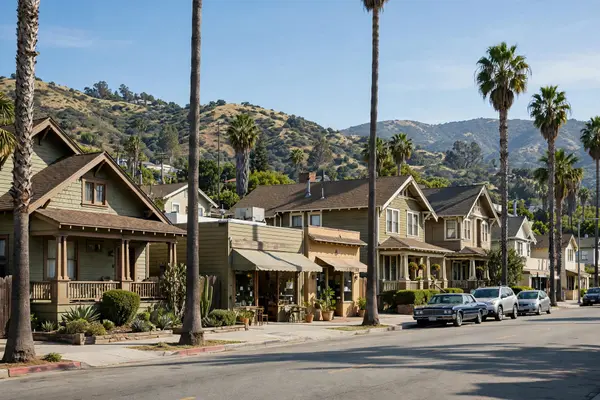
Craftsman homes and bungalows: Classic California properties with deep porches, exposed rafters, and original woodwork.
-
Spanish Colonial Revival and Mediterranean homes: Stucco walls, red-tile roofs, and distinctive period details.
-
Tudor Revival, Georgian, and Art Deco homes: Architectural styles from the 1920s and 1930s, including Streamline Moderne designs.
-
Mid-century ranch and traditional homes: Properties on flatter streets and throughout the hills.
-
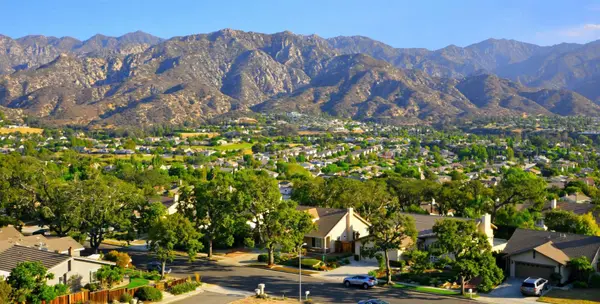
Hillside homes: Particularly around Hill Drive and the northern and eastern ridges, where some properties offer views across the valley toward the San Gabriel Mountains.
-
Multi-unit properties and newer remodels: A smaller selection of duplexes, small multi-unit buildings, renovations, and rebuilt homes.
Original architectural details are a major part of the appeal. However, older homes also require careful evaluation of the systems behind the charm. Roofs, foundations, plumbing, electrical systems, and sewer lines all deserve close attention during the buying process.
Prices can vary considerably by street, elevation, condition, and lot size. Rather than relying on Los Angeles-wide averages, buyers should compare a property's asking price with recent comparable sales on nearby blocks.
Parks, Hills, and the Outdoors
Eagle Rock offers several places to enjoy outdoor activities and community recreation.
The Eagle Rock Recreation Center on Eagle Vista Drive serves as a neighborhood hub, with sports fields, courts, community programs, and the Eagle Rock Dog Park nearby. Yosemite Recreation Center serves the eastern side, while Eagle Rock Hillside Park and Richard Alatorre Park add green space along the northern and western edges.
The surrounding hills are also part of everyday life. Residents can enjoy morning walks along steep, quiet streets with mountain views. Griffith Park, the Arroyo Seco, and Debs Park in Highland Park are also a short drive away.
Commuting and Getting Around Eagle Rock
Eagle Rock is primarily a driving neighborhood with convenient freeway access. However, public transportation has one important limitation: there is no Metro rail station within the neighborhood itself.
By car: The Ventura Freeway (134) runs along the north side, connecting residents with Glendale, Burbank, and Pasadena. The Glendale Freeway (2) on the west connects to the 5 and Downtown Los Angeles. Colorado Boulevard also provides routes toward Old Pasadena and central Glendale.
By train: The nearest Metro A Line stations are Highland Park and Southwest Museum, just south of Eagle Rock. Most residents will need a short drive or bus ride to reach them. Glendale's Metrolink station is located on the northwestern side of the area.
For everyday errands: Metro buses run along Colorado Boulevard and Eagle Rock Boulevard. Many residents walk to local businesses near Colorado Boulevard and drive for larger shopping trips or destinations farther away.
The Honest Pros and Cons of Living in Eagle Rock
Like any neighborhood, Eagle Rock has advantages and trade-offs. Understanding both can help you decide whether it fits your lifestyle.
Pros of Living in Eagle Rock
-
A genuine small-town feel: Local businesses, neighborhood schools, and a community atmosphere give the area a distinct identity within Los Angeles.
-
Historic homes and architecture: Craftsman houses, Spanish Revival properties, and hillside homes offer character and variety.
-
A strong local dining scene: Colorado Boulevard, Eagle Rock Boulevard, and nearby York Boulevard provide plenty of places to eat, shop, and explore.
-
Convenient freeway access: The 134 and 2 connect the neighborhood with Glendale, Pasadena, Burbank, and Downtown Los Angeles.
-
A creative, academic atmosphere: Occidental College contributes cultural activities and an educated, creative energy without making Eagle Rock feel like a college town.
Cons of Living in Eagle Rock
-
Competition for desirable homes: Well-maintained character properties in good locations can attract multiple offers.
-
Older-home maintenance: Many properties are 80–120 years old, making inspections and ongoing maintenance budgets especially important.
-
Limited rail transit: There is no Metro station in the neighborhood itself. Buyers who need to walk to a train station may prefer Highland Park.
-
Steep streets and variable parking: Hillside roads can be narrow and steep, and parking conditions differ significantly from block to block.
-
Traffic along Colorado Boulevard: The main commercial corridor is convenient and lively, but it can experience significant traffic during peak hours.
Who Is Eagle Rock Right For?
Eagle Rock may be a good fit for several types of buyers.
-
Buyers seeking a quieter Northeast LA lifestyle: The neighborhood offers a more residential atmosphere than some nearby areas, including Highland Park and Silver Lake, while keeping residents connected to the wider region.
-
Families: Local schools include Eagle Rock Elementary, Dahlia Heights Elementary, and Eagle Rock Junior/Senior High School. Buyers should research school boundaries and current enrollment information when evaluating a specific property.
-
Commuters: People who travel between Glendale, Pasadena, Burbank, and Downtown Los Angeles may appreciate the neighborhood's freeway connections.
-
Remote workers, creatives, and academics: Local cafés, parks, hillside streets, and Occidental College contribute to a lifestyle that combines residential comfort with cultural activity.
Tips for Buying a Home in Eagle Rock
Buying in Eagle Rock requires more than finding a home you love. These practical steps can help you evaluate properties and prepare for the process.
-
Get fully pre-approved first. Desirable character homes can move quickly, and a strong pre-approval can help make your offer more competitive.
-
Inspect older home systems carefully. Pay particular attention to the sewer line, foundation, roof, plumbing, and electrical systems. A thorough inspection can help you understand potential repair costs before committing to a purchase.
-
Verify permits for renovations. Check the permits associated with remodels, additions, and garage conversions. Verify that work was properly permitted rather than assuming improvements meet applicable requirements.
-
Compare properties by street, not just by neighborhood. A flat street near Colorado Boulevard can offer a different experience and market value from a hillside street around Hill Drive. Recent comparable sales on the same or adjoining streets can provide a more useful reference point.
-
Visit at different times of day. Explore Colorado Boulevard on a Saturday afternoon, walk a hillside street around sunset, and test your commute during rush hour. These visits can reveal details that listing photographs cannot.
Frequently Asked Questions About Living in Eagle Rock
Is Eagle Rock a good place to live in Los Angeles?
Eagle Rock is known for its small-town atmosphere, historic character homes, restaurants and shops along Colorado Boulevard, hillside views, and freeway access between Glendale, Pasadena, and Downtown Los Angeles. Whether it's the right fit depends on your budget, commute, and lifestyle preferences.
What types of homes are in Eagle Rock?
The neighborhood has many single-family homes dating from the early 1900s through the post-war years. Common styles include Craftsman and bungalow, Spanish Colonial Revival, Tudor, and mid-century homes. You'll also find hillside properties with views, some duplexes and small multi-unit buildings, and newer remodels.
Is Eagle Rock, Los Angeles, walkable?
The areas around Colorado Boulevard and Eagle Rock Boulevard are walkable for coffee, dining, and shopping. Residential streets farther from these commercial corridors — particularly in the hills — are quieter, and most residents still drive for larger shopping trips.
How is the commute from Eagle Rock?
The 134 and 2 freeways connect Eagle Rock with Glendale, Pasadena, Burbank, and Downtown Los Angeles. There is no Metro rail station inside the neighborhood. The nearest Metro A Line stations are Highland Park and Southwest Museum, just south of Eagle Rock.
What should buyers check before purchasing an older home in Eagle Rock?
Buyers should pay close attention to the sewer line, foundation, roof, plumbing, and electrical systems. It's also important to verify permits for renovations, additions, and garage conversions, particularly in older homes where past improvements may require further investigation.
Work With Smyth Properties Group
Thinking about buying or selling in Eagle Rock or elsewhere in Northeast Los Angeles? Smyth Properties Group helps buyers and sellers across Eagle Rock, Highland Park, Glassell Park, Mount Washington, Pasadena, and Glendale with local knowledge and straightforward advice at every step.
Drew Smyth — Smyth Properties Group | Real Brokerage
CA DRE #02027853
500 N Brand Blvd, Suite 2000, Glendale, CA
Categories
Recent Posts
GET MORE INFORMATION